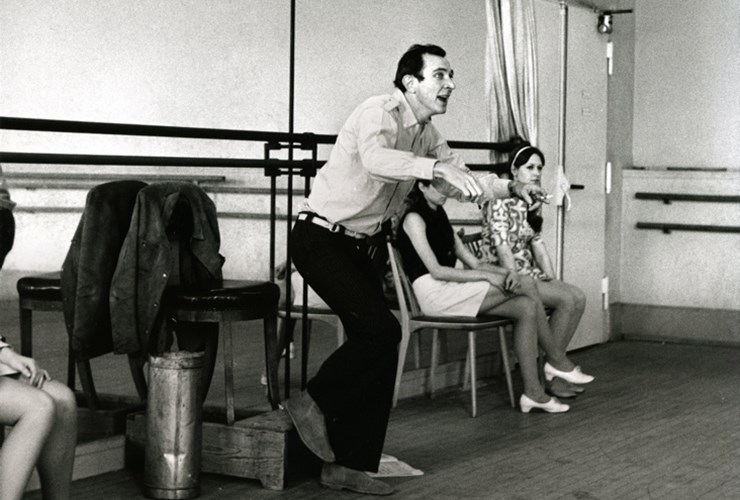
Als der südafrikanische Choreograf John Cranko 1961 in Stuttgart Ballettdirektor wurde, begann der Aufstieg des Stuttgarter Balletts. Mit seinem sicheren Gespür für Talente engagierte Cranko erstklassige Tänzerinnen und Tänzer wie Egon Madsen, Richard Cragun, Birgit Keil, Susanne Hanke und allen voran Marcia Haydée. Seine abendfüllenden Handlungsballette begeisterten Publikum und Kritiker gleichermassen. Cranko gilt als genialer Erneuerer des klassischen Balletts.
Mit seinen beiden gefeierten Choreografien „Romeo und Julia„und „Onegin“ ging die Kompagnie 1969 auf die erste USA-Tournee – ein grosses Risiko für das damalige unbekannte Stuttgarter Ballett. „Entweder tot oder gross“kommentierte Cranko seine Chancen, vor dem anspruchsvollen New Yorker Publikum zu bestehen. Bereits die Premiere wurde ein voller Erfolg. Alle weiteren Vorstellungen waren total ausverkauft. Seitdem spielt das Stuttgarter Ballet in der ersten Ballett-Liga mit.
Thanks to all these amazing people I’ve met in the ballet world. It’s such a pleasure to get insights of this hidden world. I want to show you how grateful I really am for all love and support.
I want to thank all ballet lovers who shared my passion of ballet and dance. I have always loved to hear from you. You inspire me!
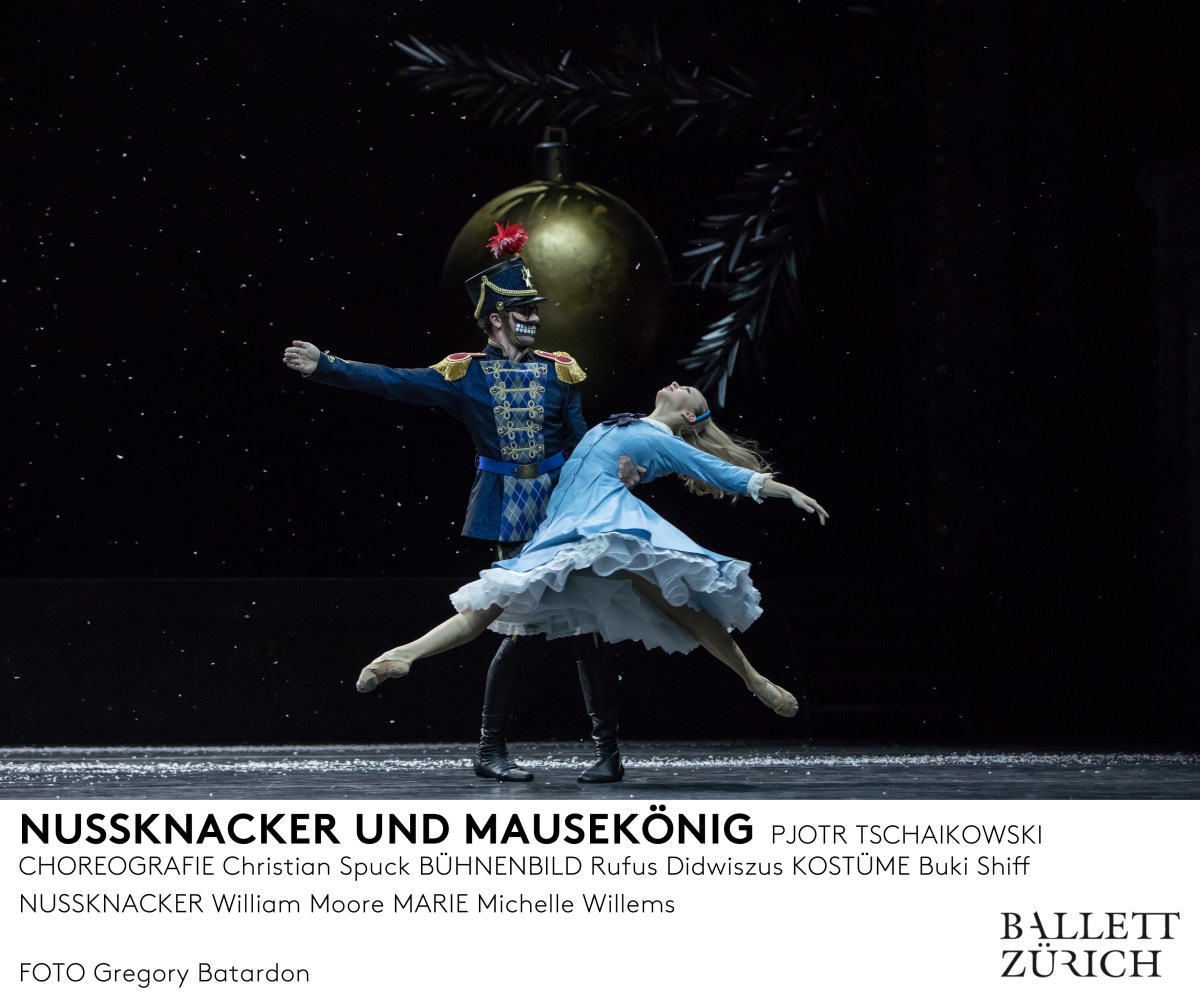
Watching the Nutcracker on Christmas Day is my holiday tradition since years. Numerous ballet companies around the world offer this famous Christmas ballet now online or on Demand. In times of Covid I can’t see The NUTCRACKER live on stage. There are so many beautiful choreographies available, next to the original by Marius Petipa and Lev Ivanov, done in 1892. My favourite interpretations are by George Balanchine, Peter Wright and Christian Spuck.
Interview with Michelle Willems on her career at Ballet Zurich
You danced the main roles in Nutcracker and the Mouseking, the little Match girl and Sleeping beauty. The characters are totally different. Could you tell us about the challenges of each ballet?
Nutcracker was my fist big role at the Ballet Zurich. I was lucky to get this opportunity and didn’t want to disappoint. I enjoyed it very much to play a little girl.
BALLETT ZÜRICH STARTET DIE SAISON LIVE MIT DEM GANZEN ENSEMBLE
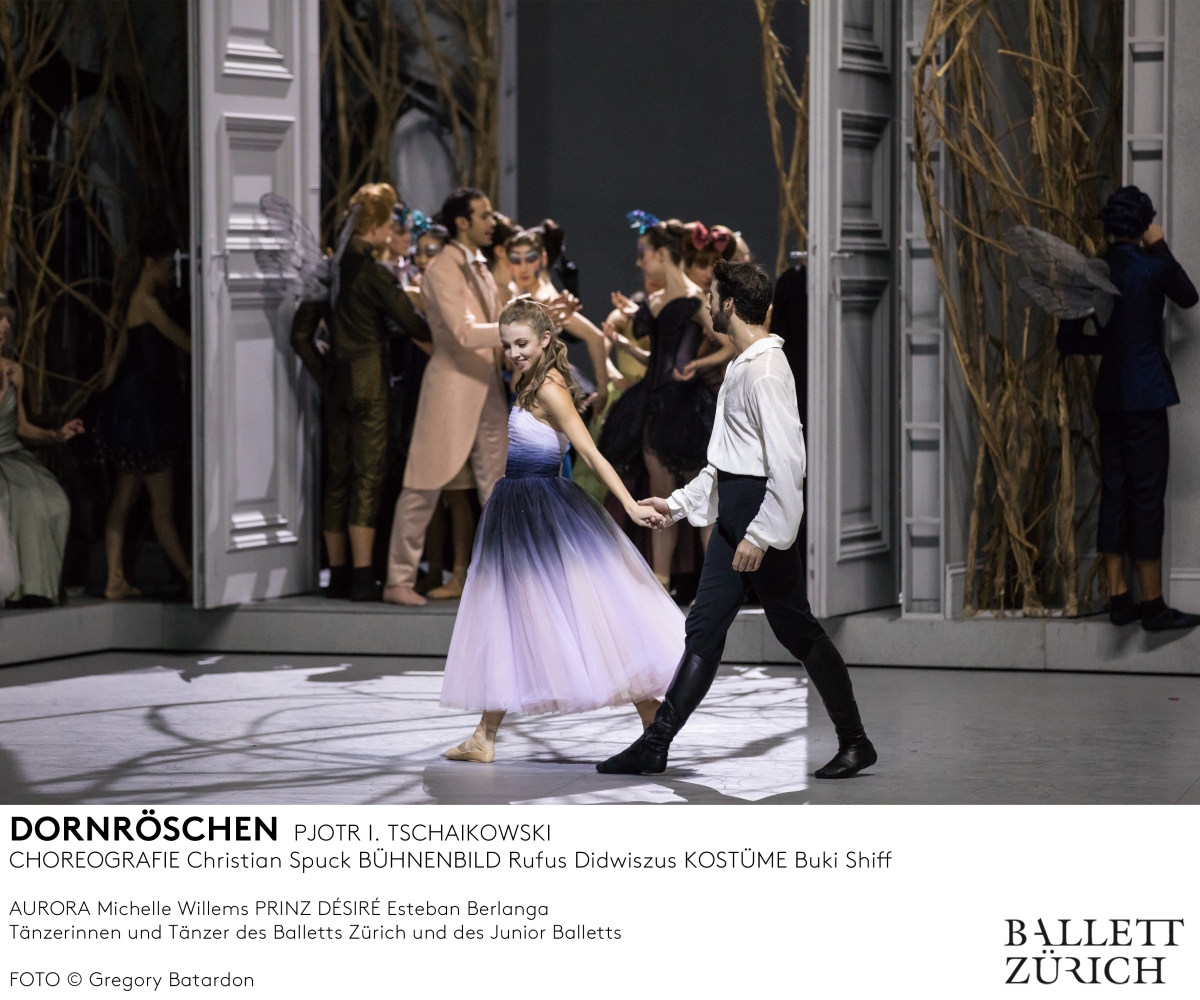
Premiere Dornröschen Opernhaus Zürich vom 10.10.2020
Ballettdirektor Christian Spuck eröffnet die Saison mit einer eigenen Version vom Ballettklassiker DORNRÖSCHEN. Der Charakter der Carabosse rückt mehr in den Mittelpunkt – ursprünglich die böse Fee, die aus Rache Dornröschen verflucht, weil sie nicht zur Tauffeier einladen wurde. Spuck fügt einen Prolog im Feenreich hinzu. Jeder Säugling ist einer Fee anvertraut, bevor er den Menschen übergeben wird. Das kinderlose Königspaar kidnappt ausgerechnet das Mädchen der Fee Carabosse (William Moore). Und somit nimmt die Geschichte seinen Lauf….
I found this amazing video of the Royal Ballet on Youtube and want to share it with you the science of how dancers learn choreography. What happens in the dancer’s brain? How does dance effect the brain?
The Royal Ballet Company loves to enriching people’s lives through ballet. It offers a lot for all ballet lovers, digital and learning platforms for young people and adults, international touring, ROH live cinema every season all over the world. Ballet production were regularly streamed online. In times of covid 19 the Royal Opera started a fanatic programme for free to please all ballet fans.
By Judith Hunger, guest entry published by Zett, a magazine by Zurich University of the Arts, 2018
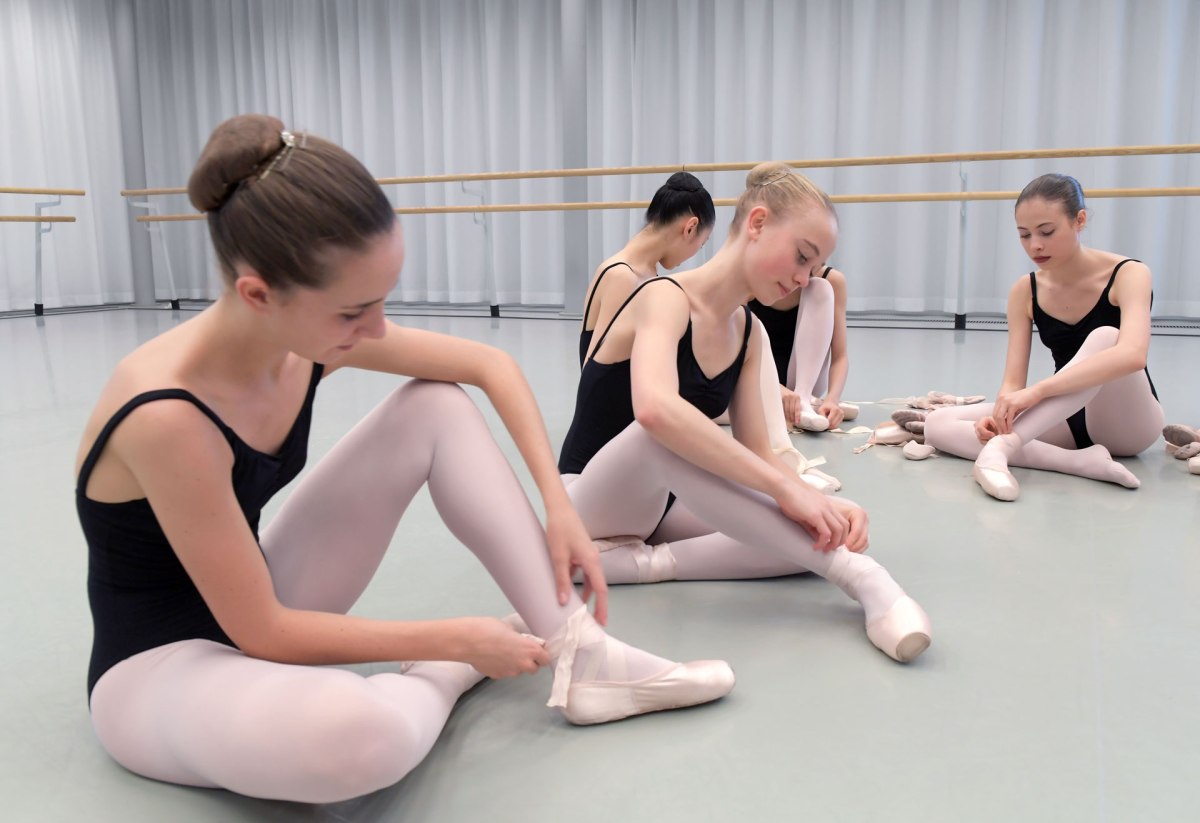
What began in 1832 with the world premiere of the ballet “La Sylphide” is still part of the training received by future ballerinas: dancing on pointe. The challenging footwork is also taught and practised everyday at Zurich Dance Academy.
“Pointe work is highly demanding and requires very good training, patience and discipline. It takes a long time before the lightness becomes visible,” says Steffi Scherzer, artistic director of Zurich Dance Academy (taZ). She knows what she is talking about. Her career — from group dancer to prima ballerina — lasted 28 years. “It takes students some time to find the right pointe shoes. It’s constant trial and error,” adds Tina Goldin, who teaches classical dance and pointe work at taZ. The shoes, moreover, must be individually fitted. Possible pressure points need to be softened as a precaution, elastic bands are sewn onto the shoe or the sole need shaping. This can take up to an hour. Not unusually, ballerinas prepare more than one pair of pointe shoes per performance. They might even need to change shoes between scenes.
A new role for the foot
It was the legendary Marie Taglioni who first danced a whole performance on tiptoe in Paris in 1832. Henceforth called “prima ballerina,” she lent the mythological air spirit — Sylphide — a new body- and weightlessness. In addition, Marie Taglioni wore a tutu for the first time in the eponymous ballet — a “romantic” tutu, as it is called in technical jargon. Yet another sensation was that, up until those days, ballerinas were dancing in frock coats. The bone of contention was the length — or rather the shortness — of the tutus. It reached down to roughly the middle of the calf to provide a clear view of the ballerina’s footwork. The dancer’s foot thus assumed a new role: it became part of the dancer’s artistic expression.
From a medical point of view, a ballerina’s foot assumes a new function in pointe dance. She stands on her “stretched-out” foot — in what resembles a small evolutionary step. Her body weight is balanced in the toe cap, which is glued with several layers of fabric, on a very small surface. To dance professionally and safely in pointe shoes, the feet must be strengthened under expert guidance over several years through very specific training.
Feet subject to such wear and tear require intensive care. taZ students massage them with rubber balls, cushion their pointe shoes and bind their toes in special tape. Extensive application of cream, to keep the skin as soft and elastic as possible, is as much a daily ritual as strengthening the feet through special exercises using resistance bands. In short, the list of tricks in ballerina foot care is as lengthy and personal as the infinite range of different feet.
Mobility is prerequisite
“And roll up! Stand stable above the tip! Arms up! Keep your balance,” Tina Goldin instructs her undergraduate students. “We start with the simplest bar exercises. At this stage they primarily serve to build up strength,” she explains. The individual elements are still clearly distinct. “The feet should also preserve a certain elasticity,” adds Steffi Scherzer. Natural foot and body mobility and flexibility are essential prerequisites for professional ballet. “We can promote mobility, but we can’t create it. It’s a prerequisite for classical academic dance.”
What begins simply ends highly demandingly. Advanced classes focus on speed and on mastering the different dynamics. Students also devote much time to skillfully combining individual elements — the soft and expressive in the adagio, the swift and lively in the allegro — into a virtuoso whole. At this stage, the pointe shoes should no longer be a foreign object, but must have become an integral part of the foot, the leg, the entire body.
Guest Author
Judith Hunger (judith.hunger@zhdk.ch), responsible for communications at ZHdK’s Department of Performing Arts and Film, quotes Kafka in this context: “Art needs craftsmanship more than craftsmanship needs art.”
Interview with Aurélia Sellier, Founder and President of „The What Dance Can Do Project“.
Tell me about „The What Dance Can Do Project“.
We fund dance programs and events for children and young adults made vulnerable by illness, poverty or exile. We also aim to celebrate the power of dance by sharing the stories of dancers, and encourage the work of people who use their art to make the world a better place.
I founded this international Switzerland-based non-profit organization in 2018. It’s run by a team of volunteers, based in Zurich, Paris, Brussels and Wellington. Our first destination was the township of Gugulethu near Cape Town, where we collected stories of the teacher, dancer and social entrepreneur Theo NDindwa and his students and made photographs. Photography is an important medium for us, and we had our work, text by me and images by the photographer Selina Meier exhibited in Copenhagen thanks to The Royal Danish Ballet.










 BLOG ABOUT BALLET AND DANCE
